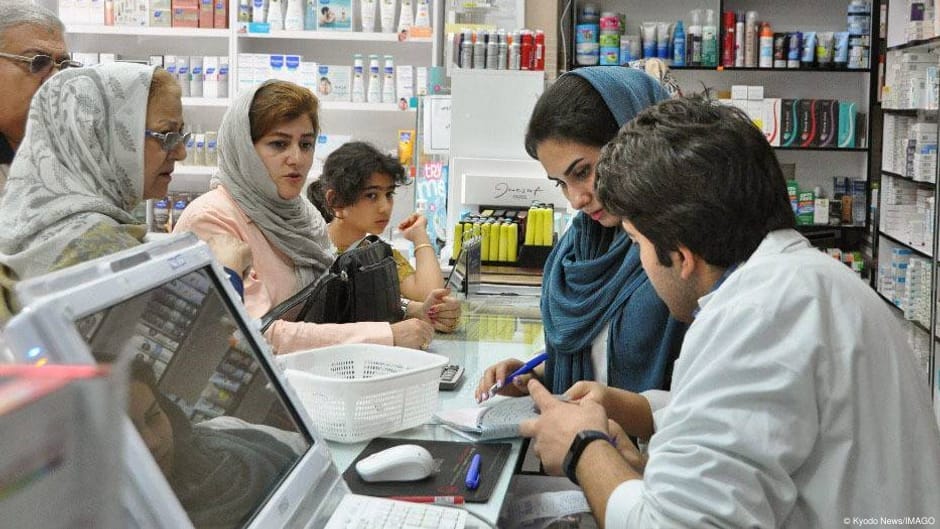
Why Iran's medicine supply chain is failing
0 / 35
English
中文
Pharmacies in Iran are closing, hospital deliveries have stalled and patients are rationing doses or turning to black markets.
(暂无翻译)
Ahmad,* 67, visited nearly 20 Tehran pharmacies for the antipsychotic drug chlorpromazine, but left empty-handed.
(暂无翻译)
"When a patient has to go to this many pharmacies just to find an essential drug, you really have to ask who is responsible for supplying medicine," he told DW.
(暂无翻译)
Mitra,* a 37-year-old Tehran resident with diabetes , spent days hunting for insulin. "These are not drugs I can postpone taking or simply give up," she said. "My life depends on regular access to this insulin."
(暂无翻译) (暂无翻译) (暂无翻译)
Their ordeal reflects a wider crisis across Iran's health care system.
(暂无翻译)
Along with Tehran residents, DW spoke with an official at Iran's Food and Drug Administration (IFDA) and pharmacy workers in Tehran, Rasht and Mahabad. The interviews were conducted anonymously or using pseudonyms as speaking with foreign media remains dangerous in Iran.
(暂无翻译) (暂无翻译)
The official said that Iran's falling currency, along with price controls, has drained domestic drugmaker profits, while unpaid hospital debts have delayed deliveries.
(暂无翻译)
"Add our own hospitals' heavy unpaid debts to distributors, and you can see why distribution has ground to a halt and companies are no longer supplying hospitals," the official said.
(暂无翻译)
"Unless the Plan and Budget Organization makes our currency allocation realistic, banks step in with loans for drugmakers and insurers settle their debts, the Health Ministry's hands will remain tied and this disaster cannot be stopped," the official warned.
(暂无翻译)
IFDA spokesman Mohammad Hashemi told Iran's semi-official ILNA news agency on November 9 that fewer than 40 of roughly 700 essential drugs faced supply difficulties. However, pharmacists told DW about how difficult it can be to get drugs on shelves.
(暂无翻译) (暂无翻译)
A pharmacy manager in Tehran said insurance payments are often delayed by months, while drug prices continue to climb. Another pharmacist in the northwestern Mahabad region said distributors demand cash upfront for scarce items.
(暂无翻译) (暂无翻译)
The insurance delays and shifting rules have pushed some pharmacies to drop contracts or refuse costly insured drugs.
(暂无翻译)
The pharmacist in Mahabad, who prefers to be called Leili,* said that general pharmacies can lack about 40 items, and larger specialty pharmacies stocking chemotherapy and complex treatments can lack over 100, including psychiatric and Parkinson's drugs, and insulin vials.
(暂无翻译)
"Many drugs can no longer be found in the official supply chain at all, such as nimodipine tablets [used to treat certain strokes] or hospital injectable antibiotics that have no substitutes," she said.
(暂无翻译)
As common items like cold medication become scarcer or more expensive, some people are turning to home remedies, she said. She added that for essential medicines like insulin, chronic patients are using smaller doses to preserve supply.
(暂无翻译) (暂无翻译)
Many of those unable to pay are middle-class customers whom pharmacists cannot easily refer to charities, she said, with elderly and psychiatric patients among the hardest hit.
(暂无翻译)
Leili warned that lower quality seen in some reverse-engineered domestic drugs presents a high risk for cancer, transplant and autoimmune patients.
(暂无翻译)
She added that some families are forced to turn to street markets usually located outside of clinics, which lack cold-chain controls and sell counterfeit medicines or drugs with altered expiration dates.
(暂无翻译)
Another pharmacy manager who asked to be called Khadiv* said scarce medicines can fetch up to 10 times their official price.
(暂无翻译)
Amid the current conflict with the US, Khadiv said US sanctions, along with border disruptions and the US maritime blockade in the Strait of Hormuz inflate import costs.
(暂无翻译)
In a statement, the US State Department told DW its sanctions follow international law to deny Tehran funds for "destabilizing behavior," stressing the measures allow "broad authorizations and exceptions" for food, medicine and medical devices. It pointed to what it called Iran's "corrupt ruling elite" for not properly allocating resources.
(暂无翻译) (暂无翻译)
Iranian officials, however, reject that claim. In late summer, Health Minister Mohammad Reza Zafarghandi called US exemption claims "a big lie," saying banking, insurance, flight and shipping sanctions block imports.
(暂无翻译) (暂无翻译)
Earlier this fall, the IFDA's raw materials chief cited currency, banking, customs and shipping hurdles as the main bottleneck.
(暂无翻译)
DW emailed the Iranian Embassy's media office in Berlin for comment but received no reply.
(暂无翻译)
"Seeing so many people unable to afford their medicine or reach medical centers leaves me with a sense of guilt and helplessness," Khadiv said, adding that lack of access can even lead to patient deaths.
(暂无翻译)
For patients like Ahmad and Mitra, the standoff offers no relief, and every day, the gap between official assurances and what is actually on pharmacy shelves grows harder to ignore.
(暂无翻译)
To view this video please enable JavaScript, and consider upgrading to a web browser that supports HTML5 video
(暂无翻译)
仅供学习使用,如有侵权请联系删除 · 查看原文