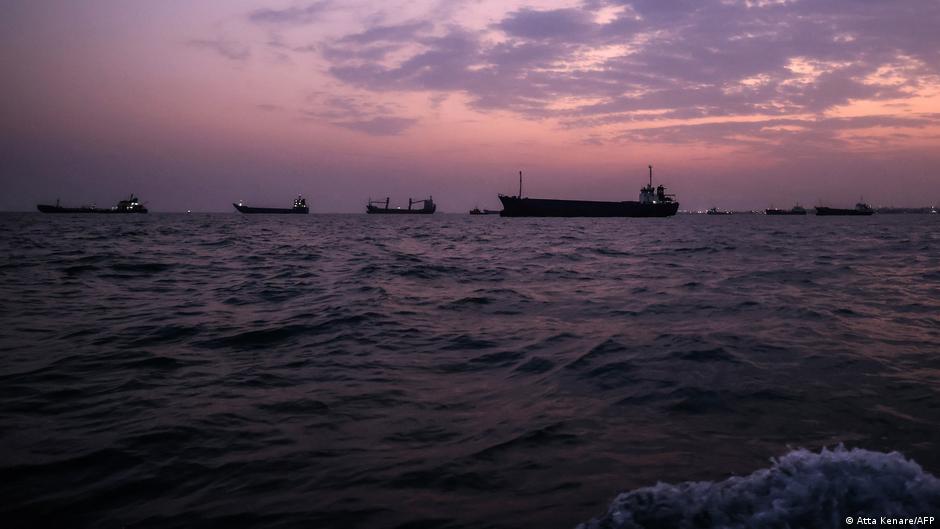
Strait of Hormuz still a source of leverage for Iran
0 / 33
English
中文
Attacks in the Strait of Hormuz put crews at risk and drive up energy shipping costs. Iran's ability to sustain them and the limits of US protection will shape how much trade can continue and at what price.
(暂无翻译) (暂无翻译)
Since the Iran war started, attacks on commercial ships in the Strait of Hormuz have put crews at risk of death and injury, forcing shipping companies to choose whether to attempt the passage or delay cargos and face higher costs.
(暂无翻译)
Merchant vessels continue to use the strait despite the danger, but how long that can continue depends partly on Iran's ability to sustain its attacks and the United States' capacity to protect shipping and bear the cost.
(暂无翻译)
Ali Mohammadi, an expert in Iranian affairs based in France, believes Iran's geography and the equipment it uses allow it to keep attacking ships.
(暂无翻译)
But he sees the economic burden of the war as Tehran's main constraint. "Iran's limitation in the Strait of Hormuz is economic rather than military, because continuing the war has a significant impact on its economy," he said.
(暂无翻译) (暂无翻译)
It's unclear how long Iran can sustain attacks given the lack of reliable information on the nation's weapons stocks and its ability to replenish supplies. And sporadic attacks in the crucial waterway are also different from closing the strait completely. "Even if a complete closure of the Strait of Hormuz were possible, it would not be sustainable because it could carry high political costs for Iran," Mohammadi told DW. "Iran cannot indefinitely disrupt its allies' access to the strait." By threatening shipping, Iran can raise the cost of confrontation and seek leverage in negotiations, but that may not guarantee success or yield concessions, the expert said.
(暂无翻译) (暂无翻译) (暂无翻译) (暂无翻译) (暂无翻译)
To view this video please enable JavaScript, and consider upgrading to a web browser that supports HTML5 video Data from the UK Maritime Trade Operations Center's (UKMTO) weekly report, released on November 6, show 325 reported transits through Hormuz between October 29 and November 4.
(暂无翻译)
That was up from 277 the previous week, an increase of about 17%. It's still roughly 65% below pre-war levels, the UKMTO assessed.
(暂无翻译) (暂无翻译)
But vessel numbers alone cannot explain what is happening to energy supplies as cargo volumes and the routes used also matter, said Dalga Khatinoglu, an expert on Iran's energy and macroeconomics.
(暂无翻译)
"If we look only at crude oil, Middle Eastern exports across all routes, from the Gulf of Oman and the Strait of Hormuz to the Red Sea, have largely recovered to pre-war levels," he told DW.
(暂无翻译)
"In some weeks in September and October, they even exceeded those levels." His assessment covers the region's overall crude exports across all routes, not just shipments passing through the Strait of Hormuz.
(暂无翻译) (暂无翻译)
The picture for refined petroleum products is different, Khatinoglu said.
(暂无翻译)
"Before the war, the Middle East exported about 6.2 million barrels of petroleum products a day. That figure has now roughly halved." Liquefied natural gas (LNG) exports have also suffered. "As of September, exports from Qatar and the UAE were about 10% below pre-war levels. Although there has been some improvement, they remain severely disrupted," the expert underscored. Khatinoglu said recovering energy exports have not eliminated the costs associated with ongoing insecurity.
(暂无翻译) (暂无翻译) (暂无翻译) (暂无翻译) (暂无翻译) (暂无翻译)
"Although oil exports from Middle Eastern countries have approached pre-war levels, shipping and insurance costs have remained very high," he stressed.
(暂无翻译)
Citing recent figures from the Organization of the Petroleum Exporting Countries (OPEC), he said that average freight rates for a large tanker carrying crude from the Middle East to East Asia has risen about 12-fold, from $3.18 (€2.84) per barrel at the beginning of the year to $37.13 a barrel at the end of October.
(暂无翻译)
This means elevated costs for Asian importers even when crude is available.
(暂无翻译)
Reducing costs and restoring commercial confidence in the safety of the strait requires more than a US military presence, Mohammadi said.
(暂无翻译)
"There is only one solution to the Strait of Hormuz issue and that's an end to the war, accompanied by a lasting agreement that brings lasting security," he said.
(暂无翻译)
Khatinoglu shared a similar view.
(暂无翻译)
"You cannot expect oil prices to return to pre-war levels simply by relying on US protection for ships in the Strait of Hormuz," he said.
(暂无翻译)
仅供学习使用,如有侵权请联系删除 · 查看原文