Is rule-breaking contagious? The bad apple effect explained
0 / 49
English
中文
Seeing someone break a rule makes people more likely to break it too, a new study finds, especially when the rule-breaker is on their side politically. Watching others behave well barely made a difference.
(暂无翻译) (暂无翻译)
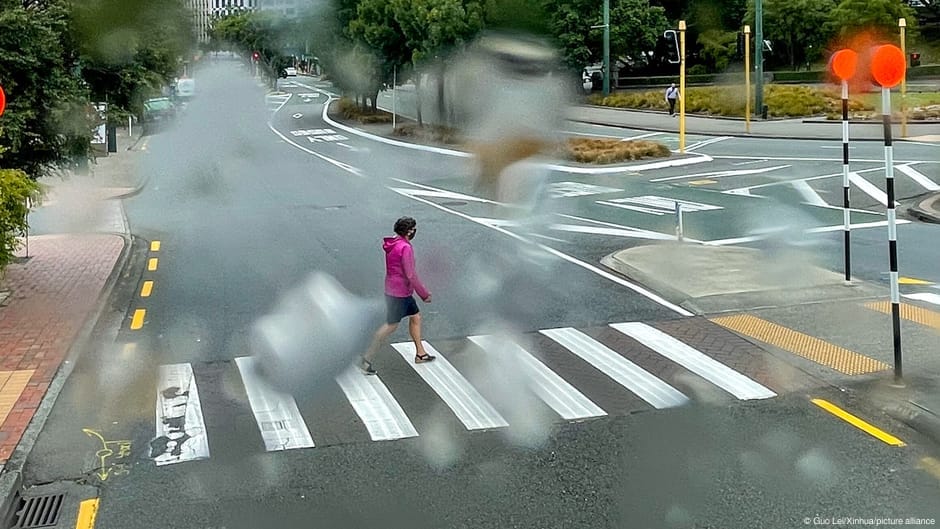
Most people stop at a red light, even when the road is empty. But what happens when the person next to them walks straight across?
(暂无翻译) (暂无翻译)
A new study suggests they become more likely to follow. In an online experiment led by researchers at the University of Amsterdam, people who saw someone from their own political camp break a rule outright were nearly twice as likely to do the same. Seeing someone follow the rule barely made a difference.
(暂无翻译) (暂无翻译) (暂无翻译)
A small number did more than copy. They broke the rule by more than the person they had watched. According to Lucas Molleman, an assistant professor of developmental psychology at the University of Amsterdam who led the research, a few bad actors like these can "basically take off the guardrails of the group."
(暂无翻译) (暂无翻译) (暂无翻译)
The researchers wanted to know how seeing other people's choices affects whether someone sticks to a rule. They recruited 750 adults in the United States, roughly half Democrats and half Republicans, a week before the 2024 presidential election.
(暂无翻译) (暂无翻译)
Participants watched an animated shooting star cross a row of 100 squares and were told to click the square where it shone brightest, which was always near the middle. Squares further to the right paid more money, so there was a reason to cheat.
(暂无翻译) (暂无翻译)
Each person chose first on their own. They were then shown what a previous participant had done, whether that person had followed the rule, bent it or broken it outright, and which party they supported. Then they could change their answer. The task was repeated six times.
(暂无翻译) (暂无翻译) (暂无翻译) (暂无翻译)
The experiment had no real-world stakes, and nobody was punished for cheating. Other researchers say that matters. "That's not how the world works," Eugen Dimant, a behavioral economist at the University of Pennsylvania who was not involved in the study, told Science News. Punishment and social pressure, he argues, also shape whether rule-breaking spreads.
(暂无翻译) (暂无翻译) (暂无翻译) (暂无翻译)
To view this video please enable JavaScript, and consider upgrading to a web browser that supports HTML5 video Rule-breaking spread in the experiment.
(暂无翻译)
When people chose on their own, they picked the square furthest to the right, the most lucrative and most blatant violation, about 23% of the time. After seeing someone from their own party make that choice, they did so almost 40% of the time. Small violations had only a small effect.
(暂无翻译) (暂无翻译) (暂无翻译)
Blatant ones had a much larger one. Most people matched what they had seen or stayed below it.
(暂无翻译) (暂无翻译)
But just over 4% went further, breaking the rule by more than the person they had watched. Good examples had little effect.
(暂无翻译) (暂无翻译)
Seeing a previous participant stick to the rule rarely changed what others did, even when that person was from their own party. People also differed.
(暂无翻译) (暂无翻译)
Some followed the rule every time and others broke it every time, whatever they saw. The rest shifted depending on what others had done. People were more likely to copy rule-breaking when it came from their own side.
(暂无翻译) (暂无翻译) (暂无翻译)
The effects were stronger when the person being watched shared the participant's political leanings. Not everyone reads that as contagion.
(暂无翻译) (暂无翻译)
Stephen Reicher, a social psychologist at the University of St Andrews in Scotland who was not involved in the study, told The Guardian that if influence depends on who the other person is, it does not spread the way a disease does. He pointed out that people who see a riot often turn up afterwards to help clean up. To see how individual choices might add up, the researchers ran computer simulations.
(暂无翻译) (暂无翻译) (暂无翻译)
They created a digital version of each participant and placed them in groups of 100. In some scenarios, the handful of people prone to escalating pushed the whole group towards heavy rule-breaking.
(暂无翻译) (暂无翻译)
But when the simulated groups contained the same share of committed rule followers as the real experiment, rule-breaking leveled off at a moderate level. Molleman calls the work fundamental science and says the real world is far more complex.
(暂无翻译) (暂无翻译)
He sees possible links to situations such as drivers speeding together, or protests that turn violent. He also says it challenges how people see themselves.
(暂无翻译) (暂无翻译)
In individualist cultures such as the Netherlands and the UK, he said that people tend to believe they make their own decisions. But "in many, many cases we are very much influenced by what others are doing." This article is an excerpt from our podcast Science Unscripted.
(暂无翻译) (暂无翻译) (暂无翻译)
仅供学习使用,如有侵权请联系删除 · 查看原文