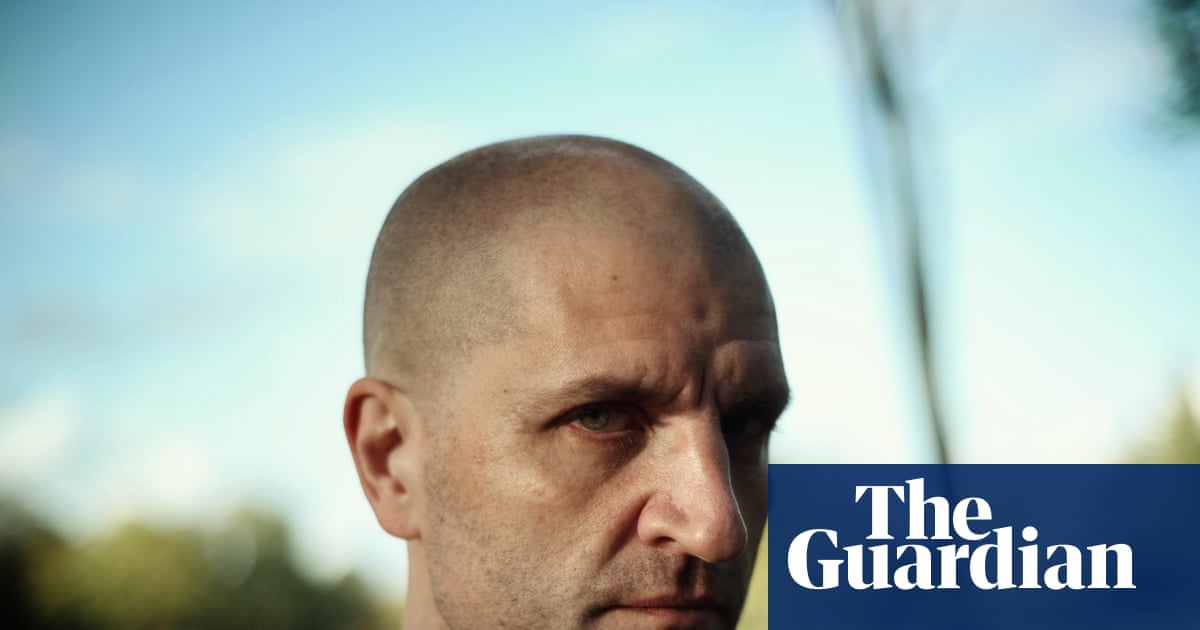
‘He was destined for this award’: China Miéville wins Goldsmiths prize for 1,200-page novel
0 / 20
English
中文
China Miéville has won the £10,000 Goldsmiths prize for The Rouse, a 1,264-page epic that is part paranormal thriller, part historical saga moving through decades of British imperial and cold war history.
(暂无翻译)
The win, announced at a ceremony in London on Wednesday, makes The Rouse the longest novel to take the prize since it was launched in 2013 to reward fiction that “breaks the mould or extends the possibilities of the novel form”.
(暂无翻译)
The novelist Francis Spufford, who chaired the judges, said all the books on the shortlist were excellent, but “it seemed only right to give this year’s Goldsmiths prize to the one that, in terms of ambition, bold use of history, linguistic experiment and sheer scale, broke most explosively with expectation”.
(暂无翻译)
Miéville has called The Rouse, which was 20 years in the writing, “the defining book of my life, that I’ve been writing for most of my adulthood” in an interview with the New Statesman, which co-founded the prize with Goldsmiths, University of London.
(暂无翻译)
The novel opens in London in 1973 and follows Maur, whose son, Ewan, dies in an apparent suicide at an army barracks. As Maur tries to uncover what happened to her son, she finds allies among other bereaved families and a journalist, and gradually discovers the British state’s covert interest in the paranormal. Her search for the truth runs alongside the story of a soldier with experience of supernatural forces.
(暂无翻译) (暂无翻译) (暂无翻译)
In a review for the Guardian, Stuart Kelly called it “maximalist, dense, disorienting and discomfiting”, arguing that Miéville deserves comparison with Roberto Bolaño and Mircea Cărtărescu, and describing the book as “affecting, intelligent and, in more than one place, very, very frightening”.
(暂无翻译)
The novelist Hari Kunzru, one of the judges, called the book “a monumental work” in which Miéville “sets himself the daunting task of describing phenomena that are indescribable, stretching language to its limits and pushing formal and genre boundaries”.
(暂无翻译)
“In a time when much fiction is careful to colour inside the lines, this enormous, exuberant, overflowing book is a reminder that the novel is capable of containing multitudes,” Kunzru added.
(暂无翻译)
Tanjil Rashid, culture editor at the New Statesman, said Miéville had spent his career giving “imaginative form to a distinctly weird vision of the world, deeply personal but also unashamedly political”. He added: “Of all the awards he has won, this is the prize he was destined for.” Miéville, who grew up in London, is known for novels including Perdido Street Station, The City & The City and Embassytown.
(暂无翻译) (暂无翻译)
He has won the Hugo, World Fantasy and Arthur C Clarke awards, and is a recipient of a Guggenheim fellowship. His nonfiction includes Between Equal Rights, a study of international law, and October, a history of the Russian Revolution. In 2024, he co-wrote a novel with the actor Keanu Reeves, The Book of Elsewhere. Spufford was joined on the judging panel by the writer and translator Kate Briggs, Kunzru and the journalist and former Evening Standard literary editor David Sexton.
(暂无翻译) (暂无翻译) (暂无翻译) (暂无翻译)
The Rouse beat five other shortlisted books: Polly Barton’s What Am I, a Deer?, Keith Ridgway’s Dooneen, Doireann Ní Ghríofa’s Said the Dead, Aea Varfis-van Warmelo’s Attention Seeking Behaviour and Missouri Williams’s The Vivisectors.
(暂无翻译)
Now in its 14th year, the prize is open to novels by writers from, or resident in, the UK and Ireland that embody “the spirit of invention that characterises the novel genre at its best”.
(暂无翻译)
Last year’s prize was won by CD Rose for We Live Here Now. Previous winners include Rachel Cusk, Eimear McBride, Ali Smith, Isabel Waidner and Benjamin Myers.
(暂无翻译) (暂无翻译)
仅供学习使用,如有侵权请联系删除 · 查看原文