Can the EU make it harder to trick consumers online?
0 / 46
English
中文
The EU wants to curb subscription traps, misleading sales tactics and features that keep people scrolling. What would the proposed Digital Fairness Act change, and does it go far enough?
(暂无翻译) (暂无翻译)
You sign up for a free trial to watch a series after work. A month later, you've forgotten about it. Then you find a charge for your new 12-month subscription on your bank statement. Sound familiar? You're not alone. Now the EU wants to stop that practice.
(暂无翻译) (暂无翻译) (暂无翻译) (暂无翻译) (暂无翻译) (暂无翻译)
Under the European Commission's proposed Digital Fairness Act (DFA), a company would have to remind you before the free trial ends and get your explicit agreement before it can start charging you. The proposed law would also make it easier to cancel a subscription online and require reminders before certain contracts renew automatically.
(暂无翻译) (暂无翻译)
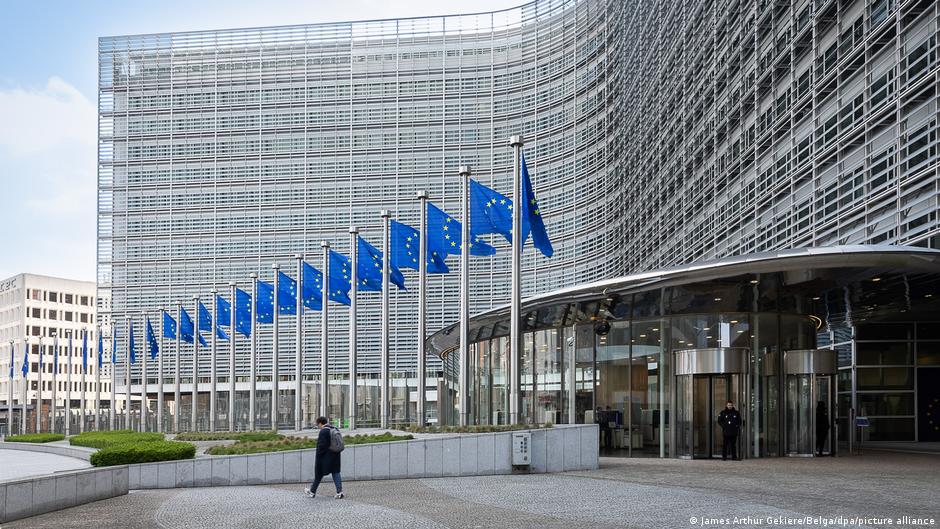
The Commission presented the proposal on Wednesday. It wants to give consumers more control over how much time and money they spend online.
(暂无翻译) (暂无翻译)
"We haven't seen that kind of reform in consumer protection in the last 20 years," Agustin Reyna, director general of the European Consumer Organisation (BEUC), told DW.
(暂无翻译)
His organization pushed for stronger EU rules against manipulative online practices. He sees the proposal as a good starting point for tackling problems that frustrate consumers every day.
(暂无翻译) (暂无翻译)
The proposal also includes a ban on manipulative marketing tactics, so-called "dark patterns." A concrete example: You are trying to reserve a hotel room and the website claims that only three are left, a potentially false claim to pressure you into buying.
(暂无翻译) (暂无翻译)
A concert ticket that gets more expensive while you're waiting in an online queue raises a different problem. The price could still go up in the process, but the seller would have to show the current price while you wait and tell you the maximum you could be asked to pay.
(暂无翻译) (暂无翻译)
Online games that encourage users to spend their money to advance are also targeted. Children would no longer be able to pay to win or get to the next level of their online game.
(暂无翻译) (暂无翻译)
Marketing and personalized ads would need to be clearly marked and restricted in the case of children. Consumers should get the option to switch off doomscrolling functions such as the autoplay of videos, showing one clip after the other. With these new rules, the EU wants to make apps and websites less addictive.
(暂无翻译) (暂无翻译) (暂无翻译)
For Christoph Busch, an academic with a focus on consumer law and digital services based at Osnabrück University in Germany, the option to opt out doesn't go far enough. He argues that a version in which consumers actively have to choose to opt into those functions would be more effective.
(暂无翻译) (暂无翻译)
"But then there is always the question of proportionality," Busch said. "And I think here the European legislators are trying to balance different interests."
(暂无翻译) (暂无翻译)
These competing interests are particularly visible in the gaming industry, where interest groups have warned that the proposed EU restrictions could hurt developers and leave players with fewer options to choose from.
(暂无翻译)
Video Games Europe and the European Games Developer Federation called the proposal "unworkable, unjustified and disproportionate," arguing that a ban on selling children features that help them win or advance is worded so broadly that it "could cover almost any purchase in a game."
(暂无翻译)
For Busch, this argument doesn't hold. "If your business model is based on addictive design features, then maybe your business model has to be reviewed," he said.
(暂无翻译) (暂无翻译)
Catalina Goanta, an associate professor of private law and technology at Utrecht University, emphasized in an interview with DW that "regulation can very easily slide into overregulation."
(暂无翻译)
Even though she believes that the DFA is a solid and reasonable compromise, she argues that prohibiting dark patterns and doomscrolling altogether would be too prohibitive. Many of the issues consumers currently face could be resolved by enforcing existing regulation more effectively, she said.
(暂无翻译) (暂无翻译)
She points to the fact that the EU has made a name for itself in the past by adding new rules and regulations that have made it more difficult to access the European market, especially for small online businesses.
(暂无翻译)
"Instead of having 27 different regulations to adhere to, companies will now only get one," Reyna said.
(暂无翻译)
For him, this speaks for simplification, especially when the responsibility for compliance is shared between online influencers and the platforms they publish on.
(暂无翻译)
According to the new legislation, the EU would have the possibility to impose fines of up to six percent of a company's global annual revenue should the company violate the law.
(暂无翻译)
The European Parliament and the Council, which represents member state governments, still have to agree on the text and formally adopt it. All experts agree that in that process, changes are still very likely.
(暂无翻译) (暂无翻译)
"It will be a difficult trialogue, especially in this climate of simplification and deregulation with a focus on strengthening European competitiveness," said Christoph Busch. In that climate, it is not easy to add consumer rights, he adds.
(暂无翻译) (暂无翻译)
Agustin Reyna is more optimistic. "The parliament is a divided house, much more than in the past," he says. "But consumer protection is a subject that brings parties together because it brings tangible outcomes to people."
(暂无翻译) (暂无翻译) (暂无翻译)
仅供学习使用,如有侵权请联系删除 · 查看原文