AI data centers in space: Millions of satellites and so many unknowns
0 / 44
English
中文
SpaceX is seeking approval to launch a million satellites into orbit to build AI data centers in space. Experts are skeptical, citing many unanswered questions. At the top of the list: Who owns the sky?
(暂无翻译) (暂无翻译) (暂无翻译)
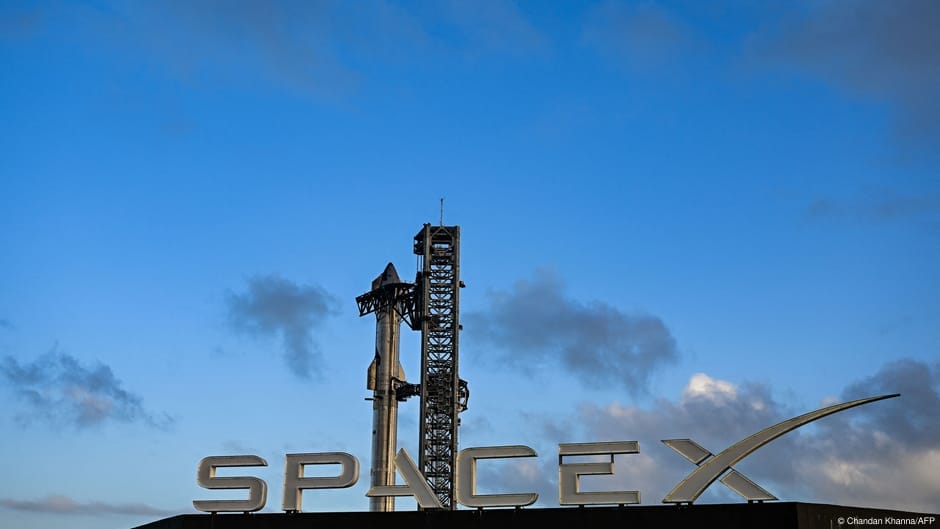
Elon Musk's space company SpaceX has got the green light from the US Federal Communications Commission (FCC) to build a network of 1 million satellites designed to host AI data centers in space. The project is called "Starmind."
(暂无翻译) (暂无翻译)
Official approval comes with an ambitious timeline: SpaceX must have 10%, or 100,000, of the authorized satellites in orbit by 2035. By 2038, that figure must reach 50%. Within 15 years, a total of 1 million satellites are expected to orbit Earth, helping meet the rapidly growing demand for artificial intelligence computing power.
(暂无翻译) (暂无翻译) (暂无翻译)
"Putting data centers onto satellites and into space is somewhat attractive due to the higher availability of solar energy," Ulrich Speidel of the University of Auckland's School of Computer Science in New Zealand told the Science Media Center.
(暂无翻译)
Depending on a satellite's orbit, it would be exposed to sunlight for more than half the day, Speidel said. And, of course, there are no clouds in space.
(暂无翻译) (暂无翻译)
SpaceX makes a similar argument, saying its satellites would take advantage of space's plentiful energy and cooling possibilities, reducing the burden on Earth.
(暂无翻译)
Electricity consumption by AI data centers is indeed rising worldwide. According to the International Energy Agency (IEA), their consumption could more than double to 945 terawatt-hours per year by 2030.
(暂无翻译) (暂无翻译)
To view this video please enable JavaScript, and consider upgrading to a web browser that supports HTML5 video In addition to electricity, data centers on Earth consume large amounts of water to cool their servers.
(暂无翻译)
According to a recent study, global water consumption for this purpose ranges from 313 billion to 764 billion liters (82.7 billion to 201.8 billion gallons). Around a quarter of all data centers are also located in regions that regularly experience water shortages, the study's authors said. Cooling in space, however, is difficult, Ulrich Speidel said.
(暂无翻译) (暂无翻译) (暂无翻译)
"The only way to remove heat from a satellite in a vacuum is to radiate it away, rather than dissipate it as we can do here on Earth using water or air cooling." Richard Easther, a physicist at the University of Auckland, also sees cooling as a challenge, "but there are plausible solutions that are entirely consistent with basic physics."
(暂无翻译) (暂无翻译)
However, Easther told the Science Media Center that the "Starmind" project is "at the very edge of technical feasibility."
(暂无翻译)
He also pointed out that Elon Musk's Starlink project would have sounded far-fetched 15 years ago. To view this video please enable JavaScript, and consider upgrading to a web browser that supports HTML5 video Easther said he sees the FCC timeline as unrealistic, joining others who doubt that SpaceX can meet its commitments to the agency.
(暂无翻译) (暂无翻译)
"That would mean launching about eight satellites per hour from now until their deadline to complete the authorized constellation of Nov. 25, 2040," Laura Revell, a professor of atmospheric chemistry at the University of Canterbury in Christchurch, New Zealand, told the Science Media Center. 1.
(暂无翻译)
Rockets and satellites damaging the ozone layer "I am extremely concerned about the levels of pollution that would accumulate in the atmosphere.
(暂无翻译)
We already know that emissions from rocket launches can cause depletion of the protective ozone layer," Revell said.
(暂无翻译)
So far, this has not been a major problem because of the relatively small number of rocket launches. But this project could undo "decades of efforts to protect the ozone layer," she said.
(暂无翻译) (暂无翻译)
The satellites themselves also pose an environmental risk, Revell said. Satellites are typically decommissioned after five years.
(暂无翻译) (暂无翻译)
When they reenter the atmosphere, they burn up, which "fundamentally turns the atmosphere into a crematorium for satellites," she said. Overall, the long-term effects of vaporized metals on the atmosphere's climate and the ozone layer are entirely unknown.
(暂无翻译) (暂无翻译)
To view this video please enable JavaScript, and consider upgrading to a web browser that supports HTML5 video Space debris is already a problem. The Starmind project would increase the number of active satellites in orbit by more than 50-fold, Michael Brown, an astronomer at Monash University in Melbourne, Australia, told the Science Media Center. "This greatly increases the risk of collisions with space junk, which could lead to the Kessler syndrome — a cascade of collisions that would make low Earth orbit unusable."
(暂无翻译) (暂无翻译) (暂无翻译)
Earth's increasingly crowded orbit is not the only factor that could make space research more difficult for astronomers in the future.
(暂无翻译)
The Starmind satellites will come equipped with enormous solar panels.
(暂无翻译)
These will be larger and heavier than other satellites because of the cooling systems they need. This could have "devastating effects on numerous astronomical observations," physicist Richard Easther said.
(暂无翻译) (暂无翻译)
Even for people who are not astronomers, the view of the night sky could change dramatically.
(暂无翻译)
The FCC made a decision with global implications on its own, dismissing environmental concerns as being "outside its purview," Laura Revell said.
(暂无翻译)
"The question is, who has the authority to protect the upper atmosphere from rocket and satellite pollution for the common good?" One thing is certain: Protecting the atmosphere should not be left to a company focused on maximizing profits. This article was originally written in German.
(暂无翻译) (暂无翻译) (暂无翻译)
仅供学习使用,如有侵权请联系删除 · 查看原文